How to Transplant Your Seedlings Without Killing Them
Ah yes. Transplant day.
The moment where your tiny, thriving, innocent little seedlings suddenly look at you like, “You’re about to do something reckless, aren’t you?”
If you’ve ever lovingly grown seedlings from seed only to watch them flop over rather dramatically after transplanting… welcome. We’ve all committed accidental plant murder.
The good news? Transplant shock is avoidable. You just need to remain calm, stop being in a rush and follow a few simple rules.
Let’s get into it.
Don’t Transplant Too Early (or Too Late)
Seedlings need to be big enough to handle the move. The sweet spot?
-
At least 2–3 sets of true leaves
-
A root system that holds the soil together when gently removed
If they’re too small, they’re fragile and dramatic.
If they’re rootbound and circling the pot like they’re planning an escape, they’re stressed already. You’ve waited a bit too long. Make a note of this on your tracking sheet so that when you try again, you can try a week or two earlier and see what difference that makes.
Timing does matter here.
Also don’t transplant in the midday sun. The best time is in the morning.
Harden Them Off (Yes, It’s Necessary)
If you’ve started your seedlings off indoors and up until this point they have been living a comfortable, sheltered life and you suddenly put them in full sun, wind, and temperature swings… they will not be happy.
Hardening off simply means introducing them gradually to outdoor conditions over 7–10 days.
Start with:
-
1–2 hours of morning sun
-
Increase exposure daily
-
Protect from harsh midday sun at first
If you plonk them down outside for the full day, they might not make it.
If however you have started your seedlings in trays outside, depending on the weather of course, you can skip this step.
Water Before You Transplant
This is one of those tiny steps that changes everything.
Water your seedlings a bit before transplanting. Not soaking wet, not bone dry — just nicely hydrated. I personally wet them, wait five minutes, and then start the work.
Why?
Moist roots slide out easier, hold together better, and experience less trauma.
Dry soil falls apart. Then you’re holding a naked root ball and the plant could struggle.
Prepare Their New Home First
Do not remove the seedling and then start digging.
Have the larger pot ready.
Have the hole ready.
Have the soil prepared with everything you need already mixed in.
Have everything prepared.
The roots should be exposed to air for as little time as possible. They don’t enjoy standing around while you reconsider your life choices.
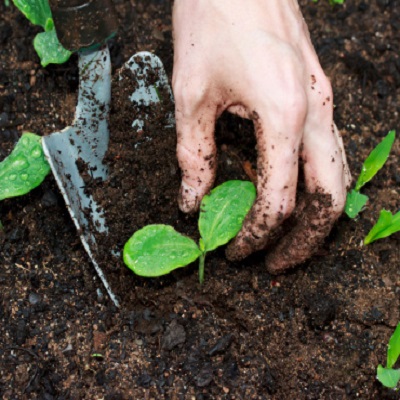
Make the hole slightly larger than the root ball so it slides in easily without bending roots upward.
Plant at the Right Depth
Most seedlings should be planted at the same depth they were growing before.
The easiest way to get this right is to use the container they were in, or something of a similar size, and shape the new hole with this.
The exception is tomatoes. They are serious overachievers. You can bury part of the stem and they’ll grow extra roots.
Before I put the seedling into its new home, I sprinkle some bonemeal into the hole as one of this things it does is help the plants roots.
Once the seedling is in the hole, fill up with soil and press it in quite firmly.
Water In Immediately
Once planted, water deeply.
This:
-
Settles soil around the roots
-
Removes air pockets
-
Signals to the plant that this move wasn’t a terrible decision
You want the soil moist but not swampy.
If the seedling flops slightly after transplanting, don’t panic. A little sulking is normal. Total collapse is not.
Give Them Temporary Protection
For the first few days:
-
Provide light shade if sun is intense
-
Protect from strong wind
-
Avoid fertilizing immediately – everything the plant needs should already be in the soil
Let them settle in before pushing growth.
Don’t Fuss Constantly
This is the hardest part!
After transplanting, walk away. Just do it. Walk away.
Do not:
-
Keep digging to “check the roots”
-
Overwater because you feel guilty
-
Move them again because you changed your mind
Plants need consistency. Once they’re in, let them adjust.
Hovering never helped anyone. Not kids. Not plants.
The Real Secret
Successful transplanting isn’t about being perfect and I think a lot of people overcomplicate this.
It’s just about minimizing stress:
-
Transplant at the right stage
- Transplant at the right time of day
-
Hydrate seedlings beforehand
-
Prepare the new space
-
Be gentle
-
Water properly
-
Leave them alone
That’s it.
No magic potion. No secret fertilizer. Just calm, thoughtful handling.
And when you see new growth a week later?
That’s your sign you did it right.
No plant casualties. No dramatic flopping. Just smooth relocation.
We love a peaceful move. 🌱