How to Grow Strawberries in Pots
How to Grow Strawberries in Pots
This post may include affiliate links where I might earn a commission, at no additional cost to you, should you go ahead and decide to buy anything off this post.
I have found that growing strawberries in pots is one of the easiest berries you can grow.
Quick plant nerd fact for you – they are classified as ‘accessory fruits’, meaning that their flesh does not come from the plant’s ovaries, but from the receptacle in which the ovaries are found.
Whether you’re a seasoned gardener or a beginner, growing strawberries in pots can be a really delicious experience.
And to be honest, get the basics right, and they are easy to grow!
Best Varieties in of Strawberries to Grow in Pots
When it comes to cultivating a fruitful strawberry garden at home, selecting the right variety is essential. Different types of strawberries offer unique characteristics that can enhance your gardening experience and cater to your taste preferences. Take a look at some of the best strawberries for your home garden:
1. June-Bearing Strawberries
June-bearing strawberries are a popular choice for many home gardeners due to their abundant fruit production during early summer. These varieties typically yield a single crop, making them a delightful treat to enjoy and share with family and friends. Their juicy, flavorful berries are perfect for snacking, baking, or adding to fresh salads.
2. Everbearing Strawberries
If you desire strawberries that provide multiple harvests, consider planting everbearing varieties. These strawberries yield fruit not only in early summer but also in late summer or early fall. With their extended harvest period, you’ll have the pleasure of savoring homegrown strawberries throughout the warm months, adding bursts of sweetness to your favorite dishes.
3. Alpine Strawberries
For gardeners seeking a unique strawberry experience, alpine strawberries are an intriguing option. These plants have a charming habit of growing as ground cover and produce dainty berries from early summer to fall. While their berries may be petite in size, they possess a captivating flavor that is often described as intense and aromatic. Alpine strawberries are ideal for adding a touch of elegance to desserts or creating visually appealing garnishes.
When deciding on the best strawberries for your home garden, consider factors like your climate, available space, and personal preferences. Each variety offers its own set of qualities, ensuring there is a perfect match for you. Experiment with multiple types to diversify your harvest and enjoy a range of flavors.
Creating a vibrant strawberry garden filled with the best varieties is a delightful endeavor. Let your home garden be a haven for these luscious fruits, and get ready to indulge in the sweet rewards that await you.
Planting and Caring for Strawberries
To start your strawberry garden, plant young, vigorous strawberry plants in spring or fall, making sure they receive at least 8 hours of sunlight each day.
Prepare the soil by mixing in organic matter such as aged compost or potting mix. This will enrich the soil with essential nutrients and improve drainage, ensuring your strawberry plants thrive.
Keep the plants well-watered and fertilized throughout the growing season. Water consistently, making sure the soil is moist but not waterlogged. Apply a balanced fertilizer specifically formulated for strawberries to promote healthy growth and fruit production.
It’s important to remove any weeds that may compete for nutrients and sunlight. Regularly inspect your strawberry garden and gently pull out any unwanted weeds, taking care not to disturb the shallow roots of the strawberry plants.
Pruning the runners is necessary to limit the number of daughter plants each summer. This will help redirect the plant’s energy into producing larger, sweeter strawberries. Simply snip off the runners with clean gardening shears.
Additionally, protect your plants from common threats such as slugs, fungal diseases, and birds. Apply a layer of appropriate mulch around the base of the plants to deter slugs and maintain moisture levels. Use row covers or netting to shield the plants from birds while still allowing for adequate airflow.
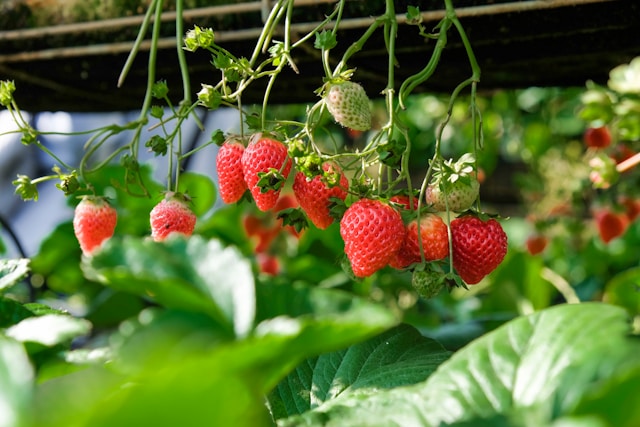
One of the easiest ways to keep your strawberry plants away from bugs, snails and slugs, is to grow your plants in hanging baskets.
By following these planting and care tips, you’ll be well on your way to a flourishing strawberry garden.
When deciding on the best strawberries for your home garden, consider factors like your climate, available space, and personal preferences. Each variety offers its own set of qualities, ensuring there is a perfect match for you. Experiment with multiple types to diversify your harvest and enjoy a range of flavors.
Creating a vibrant strawberry garden filled with the best varieties is a delightful endeavor. Let your home garden be a haven for these luscious fruits, and get ready to indulge in the sweet rewards that await you.
Understanding the Strawberry Life Cycle
The life cycle of strawberries plays a crucial role in successful gardening. By understanding how strawberries grow and develop, you can optimize your gardening practices and maximize your harvest.
Let’s take a closer look at the different stages of the strawberry life cycle.
1. Winter Dormancy: During winter, strawberry plants enter a period of dormancy where they die back and appear dormant above the ground. This is a natural process as they conserve energy and prepare for the next growing season.
2. Spring Growth: As the weather warms up and the days become longer, strawberry plants start to grow vigorously. New leaves and stems emerge from the crown, and the plant begins to gather energy from the sun.
3. Flowering and Fruit Development: In late spring to early summer, strawberry plants produce delicate white flowers. These flowers are pollinated by bees and other insects, leading to the formation of small green fruits. Over time, these fruits ripen and turn into the delicious strawberries we love.
4. Runner Production: One fascinating aspect of the strawberry life cycle is the production of runners. Many strawberry varieties produce runners, which are long stems that grow horizontally along the ground. These runners develop new baby plants, known as daughter plants, which root themselves nearby.
5. Summer Rest Period: During the second half of summer, strawberry plants take a rest period. They reduce their growth and conserve energy for the upcoming season. This allows the plants to recharge and prepare for the next stage of the life cycle.
6. Fall Bud Development: As fall approaches, strawberry plants start developing buds for the following year’s flowers. These buds contain the potential for future blooms and fruit. This stage is crucial for ensuring a successful strawberry harvest in the coming year.
Understanding the strawberry life cycle empowers you to make informed decisions about planting, care, and timing. Depending on your climate, you may choose to plant strawberries in spring to take advantage of the vigorous growth phase or opt for fall planting in warmer regions.
By aligning your gardening practices with the natural rhythm of the strawberry life cycle, you can create the best conditions for plants.
Soil, Planting, and Care Tips
The one thing to always remember, soil is the most important part to growing successful plants.
But there are other things that you need to think of as well.
1. Soil Conditions
Strawberries prefer slightly acidic soil with a pH level between 5.5 and 6.8. If your soil is naturally alkaline, consider growing strawberries in containers filled with potting mix. Sandy soil can be improved by adding compost or rotted manure to enhance its moisture-holding capacity and nutrient content.
2. Planting Techniques
When planting strawberries, ensure that the roots are well-covered with soil while keeping the central growing bud exposed to light and air. This allows the plant to establish a strong root system and encourages healthy growth. Plant strawberries in rows or mounds to provide adequate space for the plants to spread and produce abundant fruit.
3. Watering and Fertilizing
Water your strawberry plants regularly, aiming to keep the soil consistently moist but not waterlogged. Avoid wetting the leaves as this can increase the risk of diseases. Apply a continuous-release fertilizer specially formulated for strawberries during the growing season to promote optimal fruit production.
4. Mulching and Weed Control
Apply a layer of organic mulch, such as straw or wood chips, around your strawberry plants. Mulching helps to retain soil moisture, suppress weed growth, and prevent fruit rot by keeping the berries off the ground. Regularly inspect and remove any weeds that may compete with your strawberry plants for nutrients and water.
5. Pest and Disease Prevention
One of the easiest ways to keep slugs and snails away, is to grow strawberries in hanging baskets. Tt just works super well!
If you’re not doing that, use physical barriers, such as netting or row covers. This will prevent these pests from damaging the fruit.
To prevent fungal diseases, water at the base of the plant and ensure good air circulation around the plants.
6. Pruning and Runner Management
Regularly remove any runners that may be produced by your strawberry plants. While runners can help the plant propagate, having too many runners will divert energy away from fruit production. Pruning these runners will allow your plants to focus on producing larger, sweeter fruits.
| Planting Tips | Care Tips |
| Use strawberry towers to grow a lot of plants in a small, vertical space. | Water your strawberry plants regularly and try to keep the soil consistently moist but not waterlogged. |
| Ensure good air circulation around the plants to prevent fungal diseases | Apply a layer of organic mulch to conserve moisture and suppress weed growth. |
| Prune excessive runners to encourage better fruit production. | Protect your strawberry plants from pests like slugs and birds using physical barriers. |
Harvesting and Storing Strawberries
The best part! Harvesting your strawberries!
> Make sure to get them at the peak of ripeness ensures the juiciest, most flavorful fruits. To maintain their freshness, it’s best to harvest strawberries in the cool morning hours, or later in the day.
> Refrigerate them right away to preserve their flavor and texture.
> Don’t forget to wash before you eat. You haven’t used any chemicals, so you’re safe, but eating dirt isn’t really that nice!
Eat them fresh or use them in your favorite recipes (or even smoothies, or better yet, cocktails!)
| Harvesting Tips | Storing Tips |
| * Harvest ripe strawberries in the morning * Gently pluck the berries, leaving the stem intact. * Avoid squeezing or pressing the strawberries. * Don’t harvest unripe or overripe strawberries | * Refrigerate strawberries immediately after harvesting * Only wash them just before you eat them * Store strawberries in a breathable container lined with paper towel to absorb excess moisture. * Eat (or cook) within a few days while still fresh |
If you have grown a bumper crop and can’t eat them all at once, get creative! You can freeze them to use in smoothies, use them in desserts, or as toppings for your favorite dishes. Alternatively, you could dehydrate them for a quick snack, or make your own delectable jams and preserves.
21 Best Recipes Made from Strawberries
- Best Fresh Strawberry Recipes
- Strawberry Smoothies
- Strawberry Milkshake
- Strawberry Shortcake
- Strawberry Jam
- Strawberry Salad
- Strawberry Ice Cream
- Strawberry Salsa
- Strawberry Muffins
- Strawberry Cheesecake
- Strawberry Pancakes
- Strawberry Lemonade
- Chocolate-Covered Strawberries
- Strawberry Parfaits
- Strawberry Tart
- Strawberry Sorbet
- Strawberry Vinaigrette
- Strawberry Bread
- Strawberry Yogurt Popsicles
- Strawberry Sauce (for topping pancakes, waffles, etc.)
- Strawberry Mojito
- Strawberry Trifle
DOWNLOAD YOUR FREE A5 SIZE STRAWBERRY GUIDE. COLLECT THEM ALL!